Takayama in winter is a quiet town of dark wooden merchant houses, a morning market, and snow on the rooftops. It is also the most practical base for many travelers who want to see Shirakawa-go lit up in the snow, because a night inside the village itself is hard to arrange.
The 2027 illumination is scheduled for four evenings, January 11, 17, 24, and 31, from 5:30 to 7:30 p.m., according to Nohi Bus, the company that runs the bus tours from Takayama. The previous season’s event was reservation-only, so plan on booking ahead rather than showing up.
This guide covers seven places to stay in Takayama for a two-night visit. It focuses on what matters in snow: how far you walk, whether there is a private bath, and what the age rules are for children.
Who this guide is for
- Couples and retirees who want a calm ryokan or a quiet, high-end stay
- Families with elementary-school-age children (roughly 6 to 10), who need to check age rules before booking
- Travelers building a trip around a Shirakawa-go illumination evening
- Anyone who would rather avoid shared large baths
Before you book: the Shirakawa-go illumination
The illumination is the reason many people visit in January, and it shapes how you should plan.
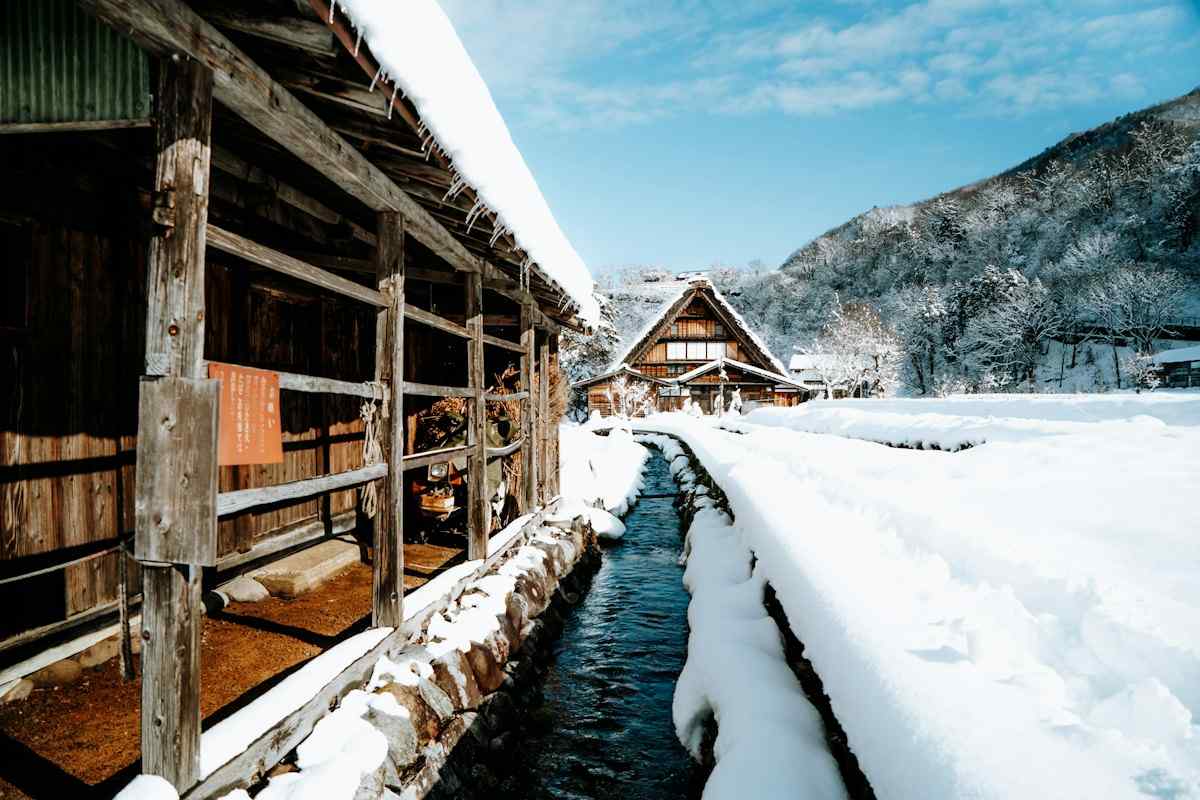
- The official bus tours from Takayama go on sale in stages. Nohi Bus sells the Light-up Bus on its website only (no phone bookings), at 2:00 p.m. Japan time on a schedule set by event date: October 13, 2026 for January 11; October 19 for January 17; October 26 for January 24; and November 2 for January 31. Each booking covers up to six people and requires a credit card.
- Three tour courses, same price on all four dates. Course A leaves the Takayama Nohi Bus Center at 3:40 p.m. and returns at 8:20 p.m. Course B adds an observation deck ticket, leaves at 3:10 p.m., and returns at 8:45 p.m. Course C includes a stop at Hirase Onsen, leaves at 2:40 p.m., and returns at 8:20 p.m. Course B involves about a 20-minute walk each way to the deck, and snow can make the trail slippery.
- Changes and one-way trips are not allowed. According to Nohi Bus, tickets cannot be changed after payment, and there is no regular bus back from Shirakawa-go after the viewing, so the tour is your way home.
- Return time matters for your hotel. Because the tours get back after 8 p.m., ask about late check-in and whether dinner can be served late or skipped.
- Staying in the village is a lottery. A lodging lottery for illumination nights has been reported (by the travel site WaTabi, citing the Shirakawa-go tourism association) to take entries through the end of October 2026. We could not open the association’s own page to confirm the rules, so check shirakawa-go.gr.jp before relying on this. If you win, you sleep in Shirakawa-go. If not, Takayama is the usual fallback.
- Driving. Parking for the event has also been reported to require a reservation. We could not confirm this on an official page, so check with the tourism association if you plan to drive.
Book the illumination first, then match your hotel nights to the date you secure. Prices for the bus tours are on the Nohi Bus page, and we do not repeat them here because they can change.
Where to stay by traveler type
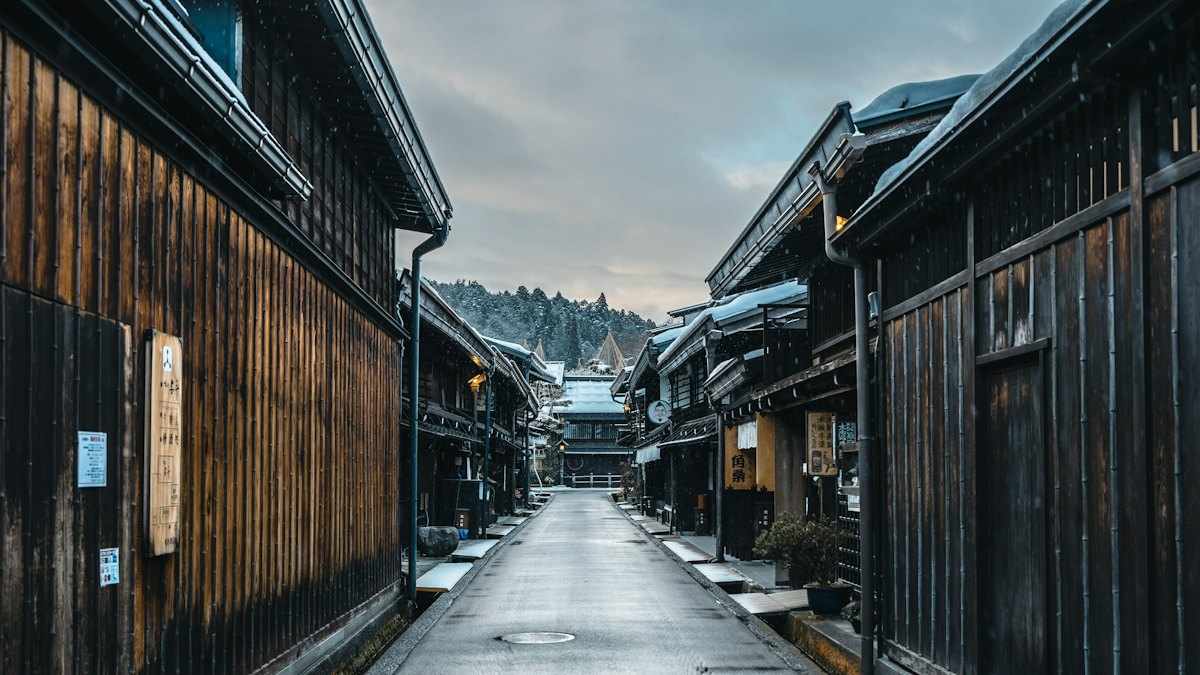
The details below come from each property’s Booking.com listing and its answers to guest questions, checked on October 12, 2026, for a two-adult, two-night stay in mid-January 2027. We are not listing room rates here, because the booking screen is where you can see the two-night total, taxes, and meal inclusion for your dates.
None of these hotels has a covered or underground link to Takayama Station, and none has a free shuttle. Expect a short walk in snow. None of them lists a bath in the guest room.
Best for a private bath and a splurge: IORI Stay
IORI Stay is a four-star stay in the Tenmanmachi area, about five minutes on foot from the station and about ten from the old town. Guest reviews average 9.5 across more than 800 ratings. It is our top pick for readers who dislike shared baths: Booking.com’s answer says there is a private bath in the courtyard. There is no bath in the room itself, so ask the property how and when the courtyard bath can be used. The listing also says shared bathing areas may be restricted for guests with tattoos.
It also offers private check-in, a concierge, a garden and terrace, family rooms, free parking, and breakfast served in the room. Children are accepted if you tell the property in advance, and children aged 5 and under stay free when using existing bedding. The rules for ages 6 to 10 and the room capacity are not listed, so ask before booking.
Best for a traditional ryokan: Ryokan Tanabe
A four-star ryokan in the Aioi area, about five minutes from the station and about ten from the old town, with reviews averaging 9.2 across more than 700 ratings. It offers an open-air hot spring, a garden, an elevator, room service, kids’ meals, massage, and special diets on request.
The baths are shared, with no in-room bath, and the property says bathing may not be permitted for guests with tattoos. Children aged 3 to 17 are charged adult rates. Ryokan stays often include dinner and breakfast, so confirm what your rate covers.
Best quiet ryokan for adults: Ryokan Asunaro
A four-star ryokan about six minutes from the station with a 9.5 review score across more than 1,100 ratings. It has an elevator, a garden, free parking, luggage storage, and wine.
Important for families: the property does not accept children under 12, so it does not work for a trip with children aged 6 to 10. Guests 12 and over are treated as adults. The baths are shared, and the tattoo rule is “may not be permitted.”
Best for easy arrival: Oyado Koto No Yume
About a two-minute walk from the station, this four-star ryokan-style hotel (reviews 9.1 across more than 2,700 ratings) is the easiest arrival on this list if you have heavy bags and a snowy sidewalk. It has an elevator, luggage storage, massage, and family rooms. It also has shared hot-spring baths, but they are the only baths, with no private option, and tattoos may be restricted. We recommend it for the location rather than for the bath. Children are accepted if you notify the property, and meals may cost extra. Age bands for ages 6 to 10 are not listed.
Best for families: Takayama Ouan
A four-star hotel about three minutes from the station and about seven from the old town, with a rooftop open-air bath, a sauna, a restaurant, and an elevator. Reviews average 8.8 across more than 4,400 ratings. Children aged 3 to 17 are charged adult rates, and you must stay within the room capacity, so check that a family of four fits before booking. The baths are shared and tattoos may be restricted.
Best for step-free access: Hotel and Spa Gift Takayama
A four-star hotel about five minutes from the station with reviews averaging 9.0 across more than 2,100 ratings. The property lists wheelchair access, a toilet with grab bars, and accessible parking, which makes it a good choice for older travelers or anyone with limited mobility. It has a restaurant, a bar, a sauna, and a shared bath with an open-air section, and the tattoo rule is “may not be permitted.” Children are welcome, and children aged 9 and over are charged adult rates, so a 9- or 10-year-old may be priced as an adult.
Best for walking to the morning market: Sumiyoshi Ryokan
A small ryokan in the Honmachi area, about one minute from the Miyagawa morning market and about twelve minutes on foot from the station, which is a longer walk than most in snow. It offers a garden, free parking, luggage storage, and family rooms. Reviews average 9.5 across 800 ratings. It has public baths, no in-room bath, and a tattoo rule of “may not be permitted.” Children from 0 to 3 stay free, and children aged 4 to 12 must be declared when booking, with extra charges.
What to eat in Takayama
Food is a good reason to come to Takayama in winter. The town sits in cold highlands, and its cooking leans on beef, buckwheat, miso, pickles, and sake. The facts below come mainly from the Hida Takayama official tourism site and japan-guide.com, checked on October 19, 2026.
Hida beef
Hida beef (Hida-gyu) comes from Japanese Black cattle raised in Gifu Prefecture for at least 14 months. To use the name, the beef must be certified by the Hida Beef Brand Promotion Conference and meet set yield and meat-quality grades; beef that falls short is sold as Hida Wagyu. You will see it as steak, and thinly sliced in sukiyaki, shabu-shabu, and yakiniku.
We could not confirm which restaurants take walk-ins in January, especially on illumination nights. If a beef dinner matters to you, book early or ask your hotel to arrange it.
Noodles, dumplings, miso, and pickles
- Takayama ramen. Thin, curly noodles in a soy-based broth. Recipes vary from shop to shop.
- Mitarashi dango. Skewered rice dumplings, grilled and brushed with soy sauce. Takayama’s version uses unsweetened soy sauce, unlike the sweet glaze common elsewhere in Japan.
- Hoba miso. Miso with green onion and shiitake, grilled on a dried magnolia leaf over a small earthen stove and eaten with rice. Vegetables and meat are often added, so ask if you avoid meat.
- Pickled vegetables. Pickling was a way to eat through long winters, and pickled red turnips are a Takayama specialty. The morning markets sell pickles.
- Hida soba. Buckwheat noodles made from buckwheat grown in the cold uplands.
Sake
The official tourism site describes Takayama as one of Japan’s great sake-producing places, with brewing dating to around the 17th century. It credits the cold climate, water from the Northern Alps, and locally grown Hida-Homare rice, and it lists six breweries in the city today. In the old town, breweries are marked by cedar balls (sugidama) hung over the entrance and typically open from 9:00 a.m. to 5:00 p.m., according to japan-guide.com. Some offer small tastings. Fees vary by brewery, and some are free.
The tourism site also describes a Sake Brewery Tour from early January to late February, when breweries open facilities that are normally closed, one week at a time. We could not confirm the 2027 schedule, so check the official page before you plan around it.
Fitting food into your plans
- Illumination nights. The Light-up Bus tours return to Takayama at about 8:20 to 8:45 p.m. Ask your hotel whether dinner can be served early, moved later, or skipped, and check a restaurant’s last-order time before you plan to eat after the tour.
- Near your hotel. Sumiyoshi Ryokan is about one minute from the Miyagawa morning market. Ryokan Tanabe lists kids’ meals and special diets on request, and IORI Stay serves breakfast in the room (Booking.com, checked October 12, 2026).
- Dietary needs. We could not find an official list of vegetarian, vegan, or halal restaurants for Takayama (checked October 19, 2026). Hida beef is the headline dish and hoba miso often has meat added, so tell your hotel about any dietary need when you book, not on arrival.
Sources for this section: the Hida Takayama official tourism site (Hida beef, local food, local sake) and japan-guide.com’s Takayama page.
The old town and morning markets
The old town’s southern streets, especially Sannomachi Street, are lined with old houses, shops, cafes, and sake breweries. It is about a 10-minute walk from Takayama Station, and shops typically open daily from 9:00 a.m. to 5:00 p.m., so plan it as a daytime walk and keep the evening for dinner.
- Takayama Jinya market. In front of the Takayama Jinya, open 7:00 a.m. to noon from January to March.
- Miyagawa market. Along the Miyagawa River, open 8:00 a.m. to noon from December to March.
- Takayama Jinya. The historic government house is open 8:45 a.m. to 4:30 p.m. from November to February (admission 440 yen) and is closed on December 29, December 31, and January 1.
Both markets run daily and sell local crafts, vegetables, pickles, and flowers. Winter opening times are an hour later than the rest of the year, so a 6:30 a.m. start is too early. Hours and prices can change, so check before you go (japan-guide.com, checked October 19, 2026). Snow can make the old town’s streets slippery, so wear boots with good grip.
Best time to visit
Mid-January is deep winter in the mountains, with snow on the ground and icy mornings. The illumination evenings are the draw. Other winter days are quieter, and the old town and morning market are pleasant in snow. Because the illumination is reservation-based, plan the village visit first and choose your hotel nights second.
Getting there and around
Takayama is a small town, and the old town, morning market, and station area are all walkable. In snow, give yourself extra time and wear boots with good grip.
The regular bus from the Takayama Nohi Bus Center to Shirakawa-go takes about 50 minutes, according to Nohi Bus, and the one-way fare is listed at 2,800 yen. Some departures require a reservation. In winter, the company warns that snow, highway closures, or parking congestion at Shirakawa-go can delay buses by more than two hours, so check the delay will not break your plans before you book.
Practical tips
- Pack light or send bags ahead. No hotel here is connected to the station by a covered passage, so wheeling a suitcase over packed snow is slow. Ask your hotel whether it can help with luggage.
- Ask about dinner. Many ryokan serve dinner at set times. On an illumination night, ask whether dinner can be moved or skipped.
- Check child rules early. Ryokan Asunaro does not accept children under 12, and others charge adult rates from age 3, 9, or 4 to 12, depending on the property.
- Tattoos. Every shared bath we checked says bathing “may not be permitted” with tattoos. If this applies to you, ask the hotel before booking.
FAQ
Can I stay in Shirakawa-go itself?
Some village lodgings have been reported to take part in a lottery for illumination nights, with places limited. Check the Shirakawa-go tourism association’s official page for the current rules. Takayama is a common alternative.
Which hotel has a private bath?
Among those we checked, only IORI Stay was listed with a private bath, in the courtyard. None listed an in-room bath.
Which hotel is best with children aged 6 to 10?
Takayama Ouan and Ryokan Tanabe list adult rates from age 3. Ryokan Asunaro does not accept children under 12. Check capacity and meal charges before booking.
How do I get back from Shirakawa-go after the illumination?
Nohi Bus says there is no regular bus back after the viewing. The Light-up Bus tours return to Takayama at about 8:20 to 8:45 p.m.
What should I eat in Takayama in winter?
Hida beef is the best-known dish. Other local foods include Takayama ramen, hoba miso grilled on a magnolia leaf, mitarashi dango, pickled red turnips, and local sake. Ask your hotel about dinner timing, especially on a Shirakawa-go illumination night.
Comments are closed